~ $ cat README.md
I lay
the foundations
other engineers build on.
Computer enthusiast, doctor and engineer. Former vice-dean of COEINF, the professional college of computer engineers of Catalonia.
The book
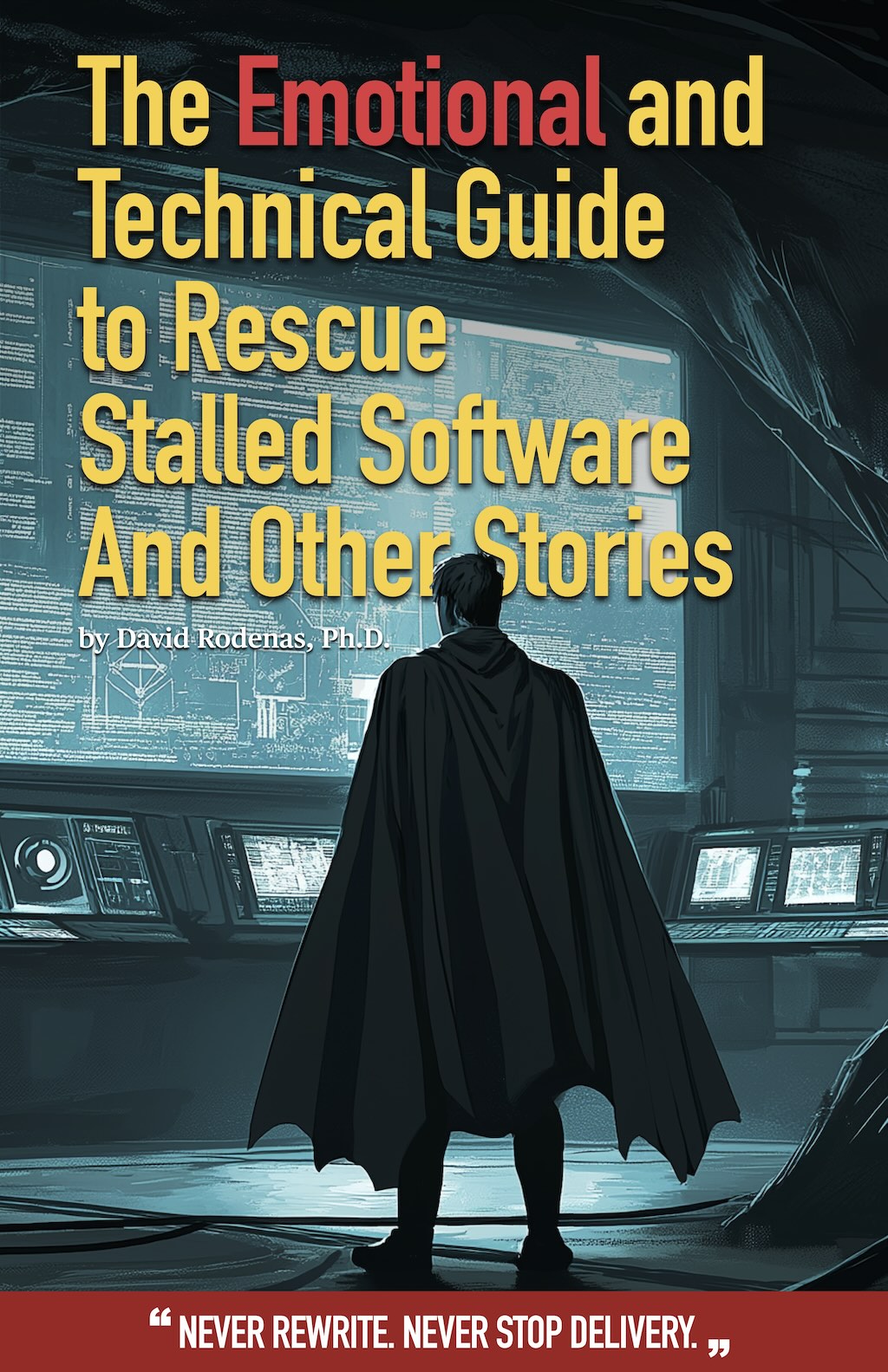 The Emotional and Technical Guide to Rescue Stalled Software (2024) is about conquering technical debt without sacrificing your sanity or your shipping schedule. Its rule fits on one line: never rewrite, never stop delivery. About the book.
What a shortcut costs, in one dial: two teams build the same features, and one of them saves time on each and pays interest on it after.
$ technical-debt
Cumulative features
The craft
Small, safe steps, always: a test that fails is put right before the next step is taken, and the code is never more than a step away from working. What I hold to, whoever writes the code.
Essays
> More than half a million views.
More than 250 on Medium, one every Saturday since 2022, and not one missed. The most read, and two of the ones read longest:
 The JavaScript framework war is over
And there is only one winner. Software Development Is A Beautiful Mess
In 1968 Dijkstra banned GOTO, and he did it for the wrong reason. Scrum vs Extreme Programming: Was XP Right All Along?
Could the most popular methodology be the thing holding teams back?
More to run
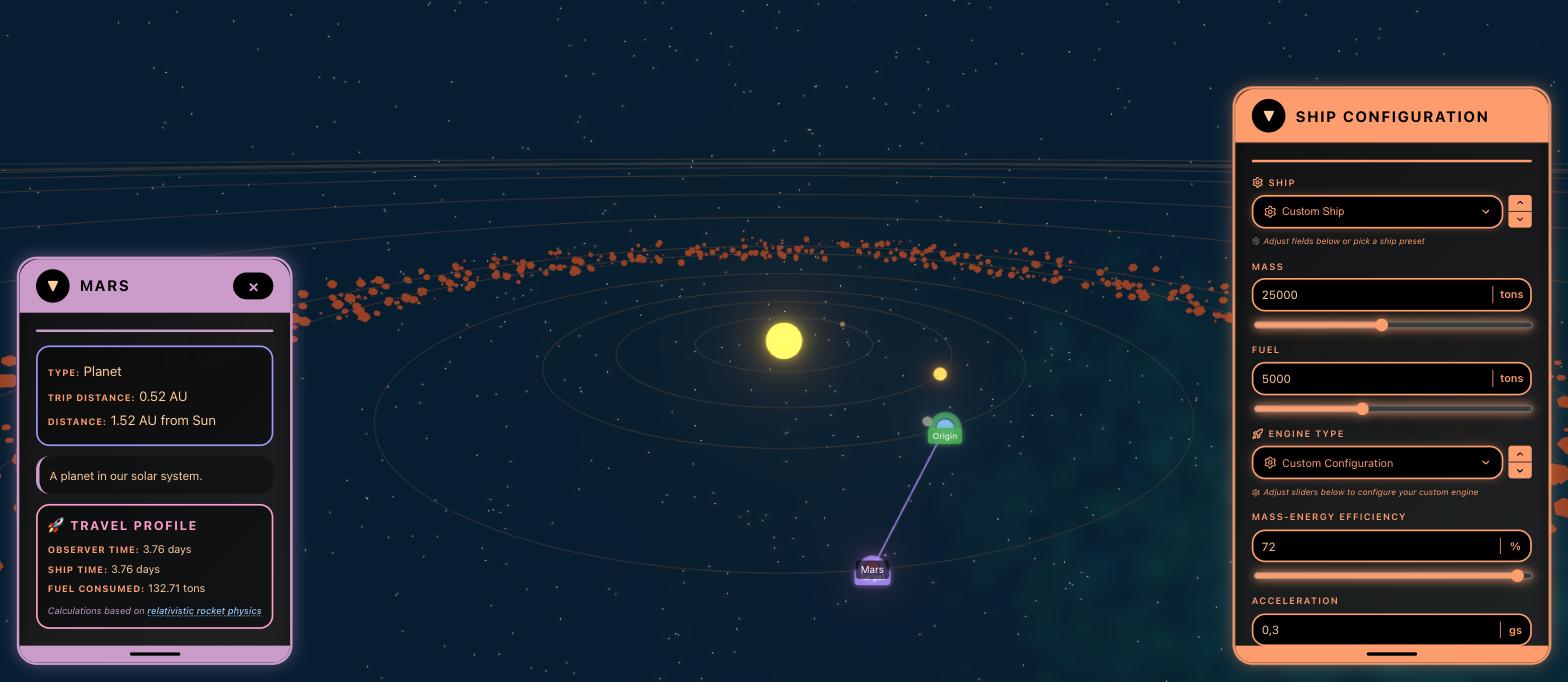 A relativistic rocket
Both clocks, the ship's and home's, and the fuel.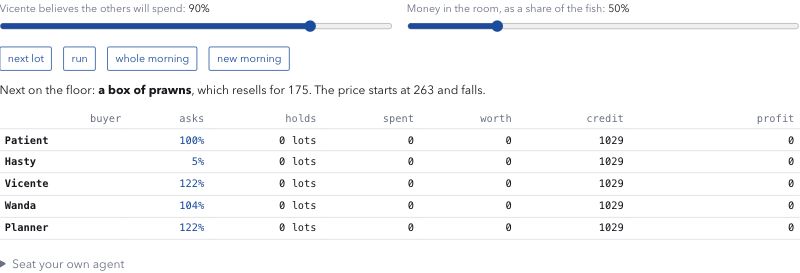
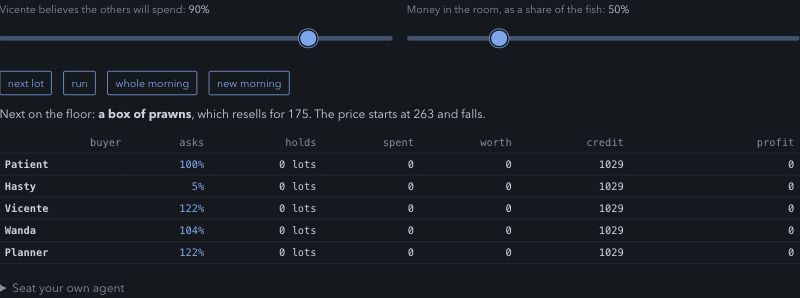 The agent that won the fish auction
A Dutch auction, December 2000. Seat your own agent.
 The Fibergochi
A student kept like a Tamagotchi, 1999. Playable.
 My first neural network
Letters told apart by backpropagation, first written in C in 1994. Draw your own.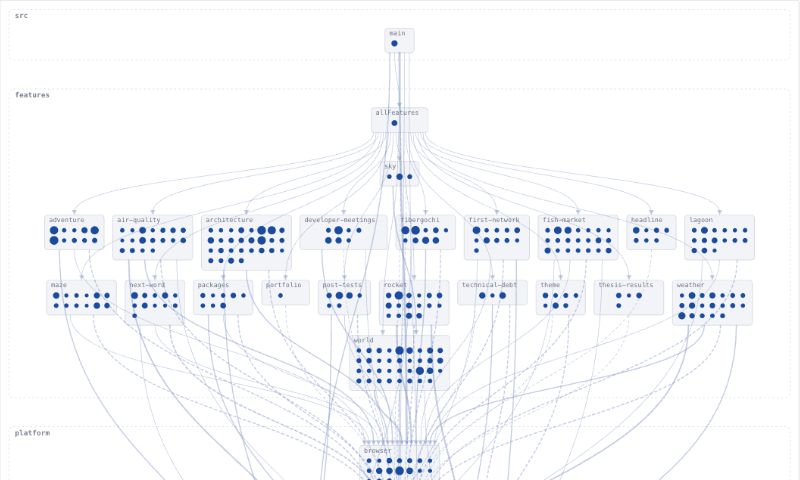
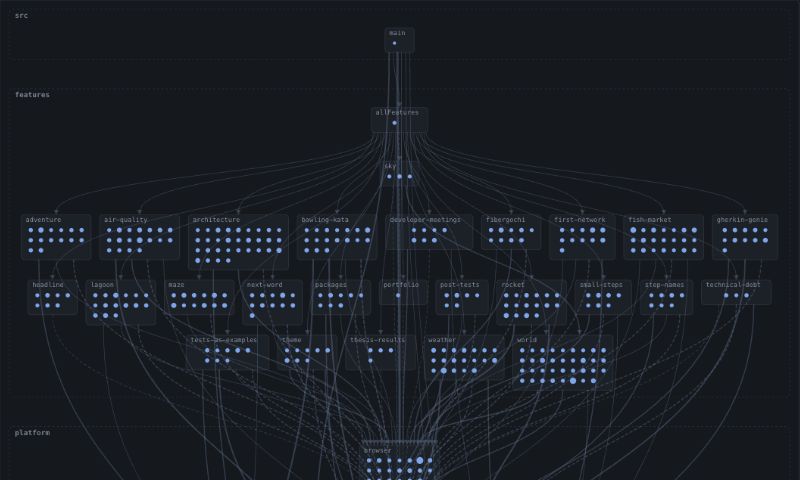 How this site is built
Its source as boxes and arrows, commit by commit: the program an AI wrote, and the rules it is held to.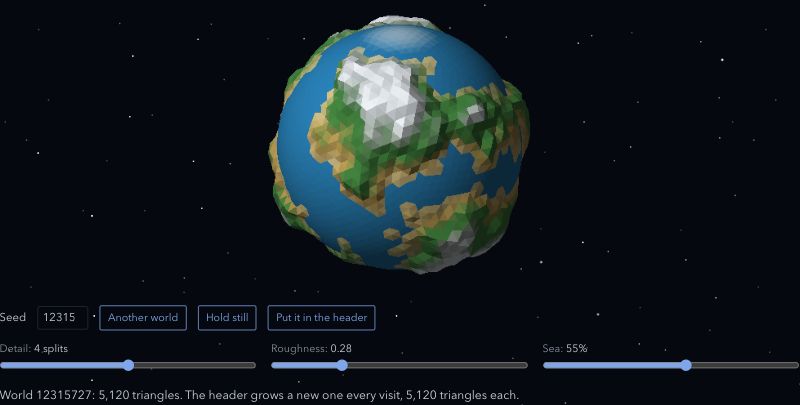
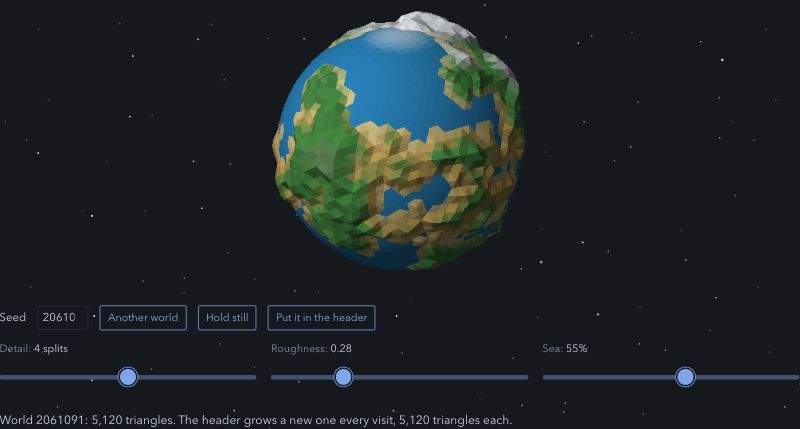 The planet in the header
Grown as this page opened, by a program I wrote in 2000. Reload for another.
Open source
Two public APIs of AngularJS are mine, and I made its compiler faster. They are still in 1.8.3, the last release it had.
~ $ ls
book/The Emotional and Technical Guide to Rescue Stalled SoftwareNever rewrite. Never stop delivery. A book about rescuing stalled software, 2024, 156 pages.essays/Essays with more than half a million viewsMore than 250 essays on Medium, one every Saturday since 2022, read more than half a million times.projects/ProjectsSmall programs you can run here, each made of one idea — from a network of 1994 and an auction of 2000 to a language model you can count by hand, with public data added up and two models of how software work goes wrong.craft/The craftWhat I hold to, whoever writes the code — in the code, with others, and behind it all. Each line runs here, or has the essays where I argued it.open-source/Open sourceCode of mine that is in other people's hands: what is still inside AngularJS, the npm packages strangers install, and what else is public.research/ResearchA PhD on making parallel hardware usable by people who are not parallel programmers. Runtimes, a simulator, a compiler, and then graph matching on a GPU; and two experiments since, on code coverage and on the language of a question to an AI.teaching/TeachingCourses I taught and what I built for students to stand on: a lab whose specifications are blog posts that compile into tests, a text adventure, a commons of fish that breed, Raft through a recipe for concurrency, and a kata.talks/TalksTwenty-one years of them: two international conferences as first author, the Barcelona JavaScript circuit of 2013–2017, and since 2022 talks about algorithms for people who do not write them.